Huwebes, Enero 12, 2017

lesson 5

Preferences of the technology generation

Texts VS visuals
-         The technology or digital generation has greater affinity to visuals compared with text.

Linear VS hypermedia
-         The new generation follows a personal random access to hyperlinked digital information.

Independent VS social learner
-         New generation are already acquainted with digital tools that adopt to both personal and participative work.

Learning to do VS learning to pass the test
-         The digital learners simply wish to acquire skills, knowledge and habits.

Delayed VS instant gratification
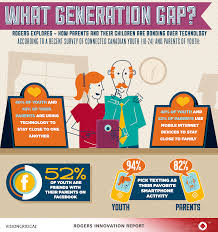
-         The digital learners experience more gratification through immediate scores from games, enjoyable conversation from webcam calls, excitements from email and inviting comments from their facebook friends.

Rote memory  VS fun learning

-         Digital learners prefer fun learning.

Image result for Preferences of the technology generation

Image result for Preferences of the technology generation

lesson 4

 Bridging the generation gap

Generation X
-         Birth years ranging from the early to mid 1960’s and ending birth years ranging from the late 1970’s to early 1980’s.

Generation Y
-         Also known as millennials.
-         1980’s as starting birth years and ending birth years ranging from the mid-1990’s to early 2000s.

Generation Z
-         Birth years ranging from the mid-1990’s to early 2000s
-         Widespread usage of the internet from a young age.

Image result for bridging the generation gap

Older generation VS younger generation
-         Manner of dressing
-         Socializing
-         Friendship
-         Marrying

Difficult to overcome
-         Caste system in india
-         Pre-arranged marriage in china
-         Female circumcision in Africa

In the field of education
-         Developed countries VS third world countries
-         Traditional VS modern
-         Public VS private

Future shock – is a book written by the futurist Alvin Toffler in 1970. In the book, Toffler defines the term “future shock” as a certain psychological state of individuals and entire societies. His shortest definition “ to much change in too short a period of time.

Image result for Future shock

To bridge the digital gap
1.   The need to understand the potentials of ICT.
2.   Technology supported skills need to be taught in school.

If the school fails to respond to emergent changes and needs
1.   The new learners may lose appreciation of the educational system.


2.   The increase of drop-out rate every year.

lesson 3

Understanding technology learners
1.   Twitter - online news and social networking site.
2.   Youtube - video sharing website.
3.   Facebook - social networking site.
4.   Linkedin -  business and employment oriented social networking site.
5.   Instagram – online mobile photo-sharing, video sharing and social networking site.
6.   Pinterest- content sharing site.
7.   Flickr- image hosting and video hosting site.
8.   Share- share a resource is to make joint use of it.
9.   Feed- provide users with frequently updated content.
10.         Skype- provide video chat and voice call services.
 Image result for understanding technology learners


Cyberspace- internet.
Newbies- first users of internet .
Netiquette- good behavior on line.

Technology/digital learners
-         Spend much time talking with friends on their cell phones.
-         Send text messages
-         Interact through social media
-         Play video games
-         Surf the world wide web.

Image result for Technology/digital learners

Jean Piaget’s traditional learning chart
First two years – susceptible minds
Six years – acquiring communication skills.
Teenage years- transition concrete thinking.
Adult years- abstract thinking and reasoning.

Research shows that multi-tasking can be detrimental this prevents concentration and the completion of specific tasks

-         Balance the good and possibly detrimental changes observed among new learners of this information technology. 

Image result for Jean Piaget’s traditional learning chart

lesson 2

An overview of Ed.tech 2
-         Concerned with integrating technology into teaching and learning.

For learners
-         To introduce, reinforce , supplement and extend knowledge and skills so that they can become exemplary users of educational technology.

For student teachers and professional teachers
-         To update their knowledge of educational technology.

Image result for An overview of Ed.tech 2 

Educational technology
-         Involved a deeper understanding of the computer as well as hands on application of computer skills.
-         Aims to infuse technology in the student teachers training helping them to adapt and meet rapid and continuing technological changes, particularly in the global ICT environment.
-         Used information technology to improve not only instruction but the school management program and curriculum.

Learning objectives of Ed.tech 2

1.   To provide education in the use of technology in instruction.
2.   To impart learning experiences in instructional technology supported instructional planning.
3.   To acquaint students in IT related learning theories with the computer as a tutor.
4.   To learn to use and evaluate computer-based educational resources.
5.   To engage learners on practical technology integration issues.

6.   To inculcate higher level thinking and creativity among students while providing them knowledge of IT related learning theories. 

Image result for Learning objectives of Ed.tech 2

lesson 1

Educational technology 1

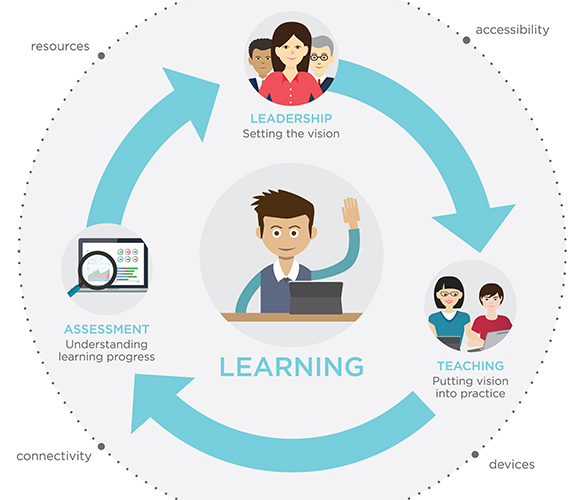
Educational technology- is the application of technology in the educative process that takes place in education institutions. 
Image result for educational technology in the classroom
       4 Phases
     1.   Setting of learning objectives
a.    Cognitive
b.   Affective
c.    Psychomotor  
     2.    Designing specific learning experiences  
     3.   Evaluating the effectiveness of the learning experiences
  4.   Revising teaching learning process for improving future instructional activities

Technology in education- is the application of technology in the operation of education institution.
Instructional technology- is refers to aspects of educational technology that are concerned with instructions.
Technology integration- is using learning technologies to introduce, supplement and extend skills.

Roles of technology in learning

1.)           Technology as tools to support knowledge construction.
2.)           Technology as information vehicles for exploring knowledge.
3.)           Technology as context to support learning by doing.
4.)           Technology as a social medium to support learning by conversing.

5.)           Technology as intellectual partner to support learning by reflecting. 
Image result for roles of technology in learning


Learning objectives of Ed.tech 1
1.   To orient the learner of educational technology in society.
2.   To lend familiarization on how educational technology can be utilized as media for teaching learning process.
3.   To uplift the learner to human learning through the use of learning.
4.   To impart skills in planning, designing, using technology.
5.   To acquaint learners on basic aspects of community.
6.   To introduce the learner to what it recognize as the third revolution in education the computer.


Image result for Learning objectives of Ed.tech 1